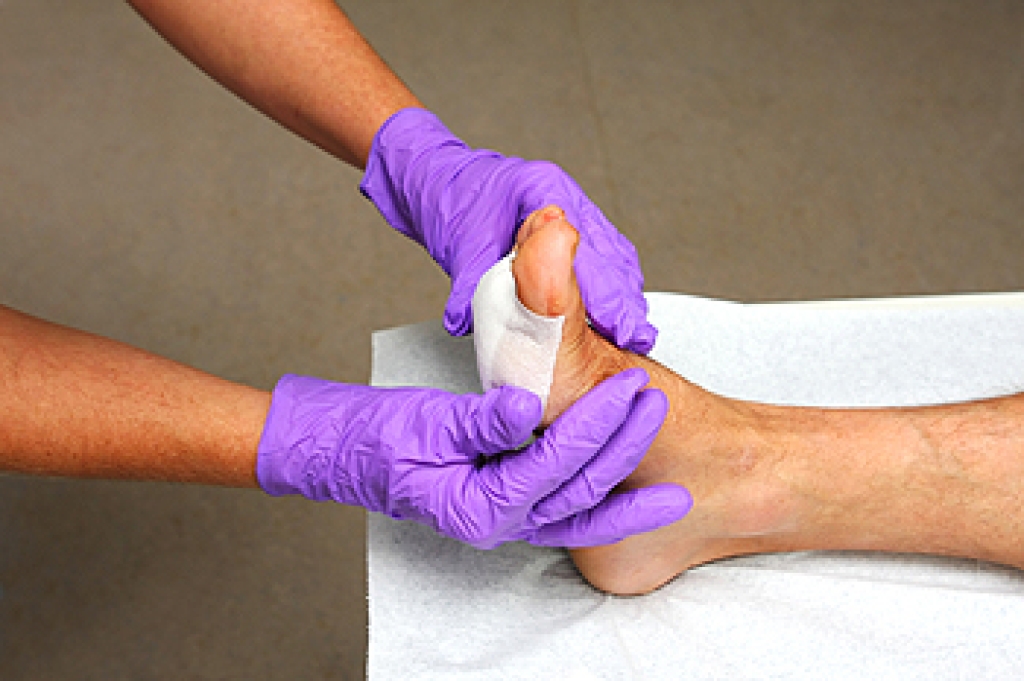
A foot wound is an opening, sore, or damaged area on the foot. Foot wounds can develop from pressure, friction, or poor circulation. Common types include diabetic foot ulcers, pressure sores, and infected wounds. Symptoms may include redness, swelling, or a wound that does not heal. People with diabetes, circulation problems, or repeated pressure may have a higher risk of serious wounds. Wearing poor footwear can also contribute to pressure and skin breakdown.
Treatment depends on the wound and the reason it developed. A podiatrist will examine the wound and assess circulation, sensation, and infection. Debridement may be performed to remove dead tissue, and this can help create a cleaner surface for healing. Pressure relief is also important. A podiatrist may recommend special footwear or padding, and regular dressing changes protect the area and support healing.
Regular wound care supports healing. A podiatrist may clean the wound and apply a dressing, and it may need to be changed regularly as directed. Antibiotics may be needed when a bacterial infection is present. Serious wounds may need additional care. Your podiatrist will monitor healing and adjust treatment. Keeping pressure off the wound can prevent further damage. Good blood sugar control can also support healing. Following care instructions can help protect the wound between visits.
Do not ignore a foot wound that becomes painful, swollen, or produces drainage. A wound that remains open or shows little improvement deserves attention. Early treatment can help reduce complications and support healing. A podiatrist can explain daily foot care and prevention. Check your feet regularly during daily activities and while wearing supportive shoes. If you have a foot wound, it is suggested that you consult a podiatrist for effective relief and appropriate treatment solutions.
Wound care is an important part in dealing with diabetes. If you have diabetes and a foot wound or would like more information about wound care for diabetics, consult with One of our podiatrists from Mitchell Foot & Ankle. Our doctors will assess your condition and provide you with quality foot and ankle treatment.
What Is Wound Care?
Wound care is the practice of taking proper care of a wound. This can range from the smallest to the largest of wounds. While everyone can benefit from proper wound care, it is much more important for diabetics. Diabetics often suffer from poor blood circulation which causes wounds to heal much slower than they would in a non-diabetic.
What Is the Importance of Wound Care?
While it may not seem apparent with small ulcers on the foot, for diabetics, any size ulcer can become infected. Diabetics often also suffer from neuropathy, or nerve loss. This means they might not even feel when they have an ulcer on their foot. If the wound becomes severely infected, amputation may be necessary. Therefore, it is of the upmost importance to properly care for any and all foot wounds.
How to Care for Wounds
The best way to care for foot wounds is to prevent them. For diabetics, this means daily inspections of the feet for any signs of abnormalities or ulcers. It is also recommended to see a podiatrist several times a year for a foot inspection. If you do have an ulcer, run the wound under water to clear dirt from the wound; then apply antibiotic ointment to the wound and cover with a bandage. Bandages should be changed daily and keeping pressure off the wound is smart. It is advised to see a podiatrist, who can keep an eye on it.
If you have any questions please contact our office located in Chicago, IL . We offer the newest diagnostic and treatment technologies for all your foot and ankle needs.
